
联通天国
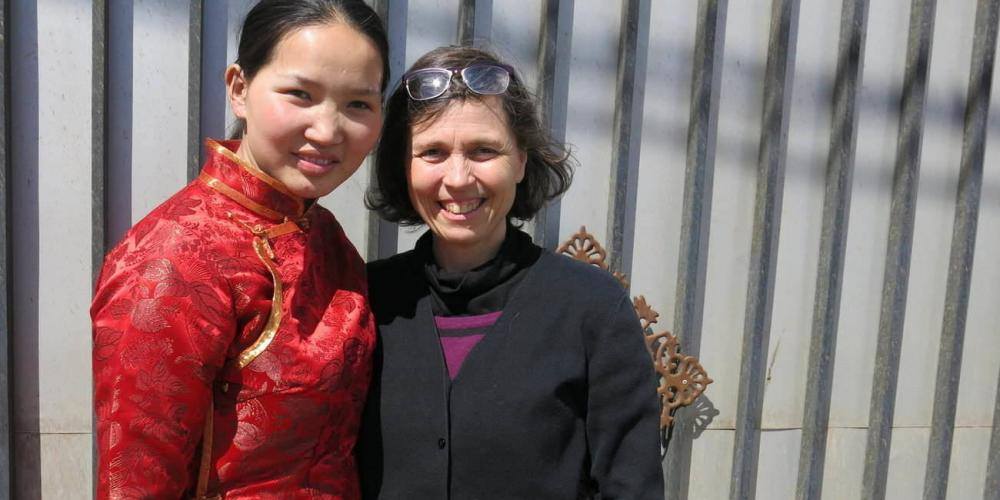
蒙古10月16日 凯特.哈特曼,55岁。
旁白:凯特和她已故的丈夫在1991年随复临先锋布道团队(Adventist Frontier Missions)抵达蒙古,他们是第一批前往蒙古的后共产主义复临传教士。她如今仍在蒙古服事上帝。凯特,请问您平时是如何祷告呢?
凯特:我们在1991年来到了蒙古,同时上帝也呼召我成为一名祷告勇士。但是我跟上帝争论说:“难道我还不算是一名祷告勇士吗?我祷告很频繁呢!”
丈夫过世之后,我再婚了,于是搬到亚洲的另一个国家住了一段时间。那时我再次蒙上帝呼召,要成为祷告勇士。我就服软地说:“好,我现在开始一天祷告三次。”
我们一家人开始每天三次祷告之后,生活上渐渐地在开始看到了奇迹的发生。本来我们有好几个月都找不到稳定的住处,结果上帝就让我们找到了一个好地方;我和丈夫失去英语老师的工作后,上帝也赐给了我们更好的教师工作。
这才是我祷告路程的起步。第二步是从我开始思考耶稣在新约中反复教导的“警醒祷告”开始的。我起初并不明白这段经文的意思,但是通过研经和怀著的指导,我明白了“警醒”意味着要注意我们的情绪、言辞和热忱的程度。
我的女儿们在青春期和青少年期常常遇到问题。我每次都会问她们:“妳们有警醒祷告吗?”她们经常承认没有照做。我们家有一个公共的祷告室,每个人每天都能在祷告室向上帝认罪悔改,并祈求上帝以慈爱、谦卑的精神取而代之。因为这样的祷告,我们家人之间就很少发生争吵。
旁白:请问您平时是如何读经的呢?
凯特:我在读本会先锋威廉·米勒尔的著作时,发现到他每次只读一个经文。我决定也尝试一下,我特别喜欢对照原文就是希伯来文和希腊文。
我现在正通过《圣经》来学习蒙古语。看一节英文再看同一节的蒙古语,然后不断地做笔记。这是个漫长的过程,我尽量每一天完成一章。
用蒙古语读经让我打开了一个完全不同的视角,因为蒙古文的《圣经》用词和英文不同。比如在申命记33章1节里面,英文版写的是“神人摩西”,而蒙古文版里写着“上帝的人——摩西”。我就想:“我是否也能成为‘上帝的人——凯特’?”这是我那天思考的重点。
旁白:那么您是怎样向别人传福音的呢?
凯特:因为不同国家的法律限制,所以不方便公开分享我的见证。但是我常常给人提问的机会,这样我就能用回答问题的方式作见证,就不会有任何问题了。
身为一名英文老师,我经常请学生在小纸条上面写下他们心里的话,用这个方式点名。然后再进花点时间来回应纸条上的话。有几位学生因此便向我敞开了心门。
还有,传福音的机会常常从友谊开始,如果能邀请人到家里做客,通过一对一的聊天,人们比较会敞开心扉。这也是为什么我很希望改善自己的蒙古语。
我每天祷告的时候都会想起扫罗在大马士革的路上见到耶稣时说的话:“主啊,我该如做?”如果我们每天在每件事上都向上帝如此询问,祂就会向我们显现祂的旨意。
来源:本文译自《圣工消息》(社会青年季刊)2021年第四季
Connecting With Heaven
Mongolia, October 16, Cathie Hartman, 55 years old.
Narrator: Cathie and her late husband, Brad, were the first post-Communist Adventist missionaries to Mongolia when they arrived in 1991 with Adventist Frontier Missions, a supporting ministry. She still serves God in Mongolia today. Tell us, Cathie, how do you pray?
Cathie: When we arrived in Mongolia in 1991, I felt that God was calling me to be a prayer warrior. But I said to God, “I pray all the time. How am I not a prayer warrior?” I argued with God.
After my husband died, and I remarried, we moved to another Asian country for a while. I sensed God calling me again to be a prayer warrior. I relented and said, “OK, I’ll put ‘pray three times a day’ on the schedule.”
Miracles began to happen as my husband, three young daughters, and I prayed three times a day as a family. We had been looking for months for a place to live, and God provided a home. My husband and I lost our job teaching English, and God provided a new teaching position that was even better.
That was the first step where God took me in prayer. The second step came when I began to ponder Jesus’ repeated instructions to “watch and pray” in the New Testament. I wasn’t sure what He meant. I looked for passages in Ellen White’s writings about watching and praying, and I condensed them into one document. I learned that “watching” means that we are supposed to watch our emotions, watch our words, and watch whether we have an indifferent attitude.
Whenever my daughters had struggles in their early teens, I asked, “Have you watched and prayed?” Usually, they acknowledged that they had not. We set aside a prayer room in our home where each of us, three times a day, privately confessed our sins and weaknesses and asked God to replace them with a loving, humble spirit. This really helped smooth our family relationships.
Narrator: How do you read the Bible?
Cathie: After I read that church pioneer William Miller went through the Bible one verse at a time, I decided to try that, too. It was exciting to compare each verse with the original Hebrew or Greek.
Currently, I am trying to improve my Mongolian language through the Bible. With a notebook nearby, I read a verse in English and then in Mongolian. It’s a very slow process, but I try to do a chapter a day.
Reading in Mongolian has given me a new perspective because different words are used. One morning I read Deuteronomy 33:1, which in English says, “Moses, the man of God.” But in Mongolian, the description is, “God’s person Moses.” I wondered, “Can I say, ‘God’s person Cathie?’” That was all that I needed for that day.
Narrator: How do you witness?
Cathie: Laws in some countries where I’ve lived make it difficult for foreigners to share openly. But you can create opportunities for people to ask questions, and it’s perfectly acceptable to answer questions.
As an English teacher, I took class attendance by asking students to write something on a slip of paper. I took the time to respond to each note. Some students opened up their hearts.
Often, it’s simply a matter of being friendly and inviting people over to your home. People open up their hearts in one-on-one conversations. That’s why I want to improve my Mongolian.
My daily prayer echoes the words of Saul when he saw Jesus on the road to Damascus. He said, “Lord, what would You have me to do?” God reveals His will when we ask, “What would You have us to do?” in each situation every day.
Please find the original article at: https://am.adventistmission.org/mqa21q4-08
 现代真理
现代真理 