
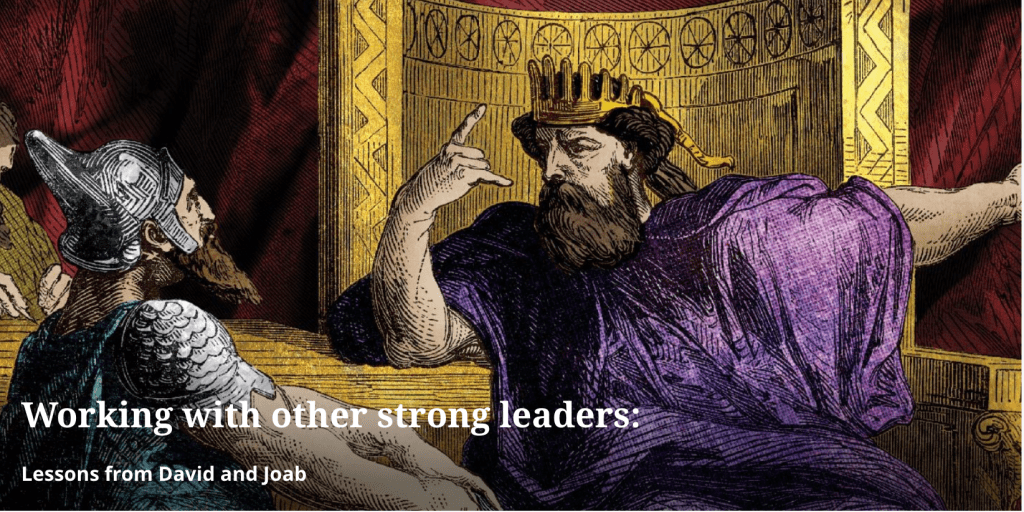
如何与强势领袖同工:
来自大卫和约押的教训
作者格伦·汤森,文学硕士,基督复临安息日会南太平洋分会主席,现居澳大利亚 新南威尔士州 瓦鲁恩加
史蒂夫的故事
史蒂夫是一位杰出的青年牧师,无论是讲道还是叙事他都充满活力。他所传讲的信息贴近儿童和青年。他也很有亲和力,且擅于倾听、习惯肯定、乐于助人。史蒂夫是圣经式仆人领袖的典范,受到了全体会众的认可,因他对教会的贡献,也深受首席牧师的青睐。然而,史蒂夫时常越界。他擅自披露董事会机密事务,还许诺为未经批准的项目提供资金和人员支持。首席牧师已向他指出此问题,史蒂夫也承诺自己会改正,但他却没有说到做到。那位首席牧师该做些什么呢?
梅兰妮的故事
梅兰妮是一位经验丰富的牧师,现任某区会的行政秘书。她擅长会议组织与记录,有出色的决策力与执行力,和极具牧者视野的卓越的沟通能力。在大多数人的眼中,她的工作无不雷厉风行。然而,区会秘书团队有两人表现欠佳。一个经常迟到,报告粗制滥造;另一个总是对办公室和教会中与她交往的人无礼。而梅兰妮对此视而不见。区会主席向她指出了这个问题,但为了袒护她的部属,梅兰妮说她可以管好自己的部门,无需他人插手。区会主席又该怎样行呢?
症结
大多数领袖希望拥有不同技能、长处和个性的人才,以打造均衡而高效的团队。但领袖们也谙晓自己的部属各有不足(他们自己也是如此)。这些不足将阻碍团队功能的发挥,造成盲点。而这些盲点会在无形中削弱领导力。
那么,牧师和教会领袖如何有效地应对强势领袖的缺点呢?大卫王与以色列军队元帅约押之间错综复杂关系,为我们与优缺点兼具的强势领袖沟通提供了宝贵的经验。
约押的优点
约押是大卫的外甥(撒下2:18;代上2:15,16),是一名伟大的战士和忠诚的仆人。约押击败亚扪人后,他请大卫参与末次战役,这样可将胜利归功于国王(撒下12:26–29)。当大卫意图除灭赫人乌利亚时,他也相信约押会执行杀人计划(撒下11:14–25)。当大卫的三子押沙龙谋叛,并在各支派的拥护下夺取王位时,约押仍旧忠于大卫,并率领忠诚的军队对抗其余的以色列人(撒下18:2)。在大卫治理以色列的后期,他要求约押在以色列全境数点百姓,但这一决定有违律法(出30:11–16)。约押虽晓得这不是出于上帝并反对此事,但最终,他服从了大卫的命令。虽然约押漏数了两个支派(撒下24:1–9;代上21:1–7),但依旧显出忠诚。
约押十分善于洞察人性。大卫的长子暗嫩玷辱了他同父异母的妹妹他玛,大卫却置若罔闻。他玛的胞兄押沙龙怒不可遏,他亲手杀死暗嫩,逃到了以色列外的基述。大卫为痛失两个儿子哭得甚恸(撒下13),约押察觉到大卫的情绪,便打发人从提哥亚请了一位聪明的妇人通过故事的方式开导大卫,以唤起王的正义感,鼓励他将押沙龙带回来。虽然大卫已晓得约押是幕后策划者,但他还是将押沙龙接回以色列(撒下14:1–23)。后来押沙龙反叛,大卫的军队击败以色列军队后得胜回朝,大卫因痛失爱子而哀哭。众人以为,在大卫眼里,他们来之不易的胜利还不及他失去的逆子押沙龙重要。约押劝说大卫慰劳他的军兵,否则他必被弃(撒下19:1–8)。在这件事上,约押是正确的,他敏锐的洞察力,和卓越的军事才能,挽救了大卫的王位。
简而言之,约押是一位强悍、忠诚的军官,为了领袖的最大益处,他甘愿冒险。他是在团队中广受拥戴的人。
约押的缺点
与此同时,约押嫉妒、暴戾、报复心强。押尼珥商议立大卫作全以色列的王时,约押不在场,便打发人将押尼珥带回希伯仑。这就是他的影响力。大卫尚不知押尼珥被带回希伯仑,约押就把他刺死了——这是报押尼珥在争战中杀他兄弟亚撒黑的仇(撒下3)。
大卫发怒,为押尼珥哀哭,咒骂约押。王意识到这次杀戮可能会引起国家分裂,于是命令约押和跟随他的人为押尼珥举哀,他们便照此而行。此外,在押沙龙被杀后,大卫承诺他的另一个外甥亚玛撒作以色列军队的元帅(撒下19:13)。亚玛撒的首次任务是平定另一场叛乱,但他未能按时到达,亚比筛只得率领军队。后来,亚玛撒与他们汇合时,约押却将他刺死,继续担任以色列军队的元帅(撒下20:1–13, 22, 23)。在上述的每一事件中,约押都削弱了大卫的领导力。虽然王不认可约押的行为,但他仍作军队的统帅。
大卫为何不将他除名,另立一名元帅呢?圣经没有告诉我们。怀爱伦指出,虽然约押深知上帝的恩典和律法,但他仍是一介武夫,粗鲁奸诈。1 “大卫既知道约押是一个不敬畏上帝的人,为何还委以重任呢?因为约押是一个坚定不移的忠臣,他将自己与大卫紧紧连在一起,随时准备照大卫所说的去做。然而他是上帝所嘉许的人吗?不是。” 2
约押一生都在大卫的军队中服役。随着王的年纪老迈,关于谁将成为下一任国王的猜测众说纷纭。约押旗帜鲜明地作出了自己的选择,他支持亚多尼雅作王(王上1:5-7)。但大卫并从未选择亚多尼雅继承王位,因他已许诺拔示巴的儿子所罗门作王(王上1:13)。大卫迅速立所罗门为王,挫败了亚多尼雅的政变。大卫向所罗门交接王位时,他的第一条遗命是让所罗门除灭约押(王上2:5,6),他便照着行了(王下2:28–35)。
大卫和约押
那么,大卫是如何管理猛士约押的呢?
大卫主要的管理策略是继续让约押在他擅长的领域工作——统领军队。也许这就是王决定不参与对抗亚扪人之战的原因,不幸的是,这也导致了他与拔士巴通奸的恶果(撒下11:1)。
此外,大卫还在他的左右建立了一个强悍而忠诚的领导团队(撒下8:15–18;20:23–26)。约押并不是唯一有权势的人。除了约押的党羽外,王还有其余军事领袖(撒下23:8–39)。此外,他还有好的书记、祭司长和宰相。在他的团队中有其余强悍而忠诚的领袖以平衡个人的影响,就如约押。
借鉴的原则
教牧领袖如何在领导团队中与个性强势的下属共事呢?像大卫一样,他们可以
1 .让他们在自己擅长的领域工作,并肯定他们,
2 .指正他们的不良行为,
3 .让其他有能力的领袖平衡领导团队,不允许一人独大。
查内尔·卡林在他的文章“如何管理强势部属?”中指出,在危机中,强势的领导者能够处理繁重的工作,他们专注业务,并愿意接受新的挑战和风险。3 约押当然也有这样的特点。为了最大限度地发挥他们的潜力,同时将消极影响降到最低,领袖可以分配些有难度的工作,让他们自行规划实施策略(而不是事无巨细地管理他们),尊重他们的意见;在提倡团队协作的同时,开门见山地探讨具体问题。性格测试对团队管理是有益的(大卫可能没有这工具)。虽然《圣经》没有详细记载大卫和约押的谈论,只是单线的指示,但大卫似乎也实践了这些理念中的大部分内容。
史蒂夫和梅兰妮?
那么,我们能给史蒂夫的首席牧师什么建议呢?牧师已经肯定了史蒂夫的优点,也当面指出了他具体的负面行为。如果反复提醒仍不奏效,首席牧师就需要利用他/她的支持网络。他/她有两个选择。首先,牧师可以诉诸当地的教会长老,如果长老们同意,他们就可以约谈史蒂夫;其次,牧师可以会见传道协会干事或区会会长,其中一人可与史蒂夫就他的问题谈话。随后他们会达成一个经协商一致、包含问责的解决方案,然后遵照执行。如果史蒂夫仍拒不改正,也许就只能终止雇佣关系了。
梅兰妮的同工和区会会长又当如何呢?在基督复临安息日会的体系架构中,所有的行政人员(会长、秘书和司库)都是平等且没有行政权力。执行权力仅属于执行委员会,所有行政人员,甚至包括该委员会的主席,都向执行委员会负责。会长可以和司库讨论梅兰妮的问题;如果双方都同意,他们可以一同关切地约谈梅兰妮。如不奏效,会长将别无选择,只能请求执行委员会或联合会领袖解决这一问题。执行委员会或联合会领袖应就一切与该过程的有关的事项和商定的解决方案向会长提出建议。4
教牧领袖能够全心投入一个不断成长的教会,就像大卫对他不断开疆拓土的王国和自己的同僚一样,就如约押,他十分忠诚老练,有时又固执、无法捉摸。在与强势领袖同工时,并没有简明易行的通用策略。然而,我们已经探讨了一些可实施的建议和理念,用以保持良好的团队协作。虽然人都有缺点,但每个人都有自己的价值。人人都有独特的天赋和才能以实现上帝的旨意。为了做工的果效,领导者要怀着十足的坚强与关切和同工相处,解决好一切与消极行为模式有关的具体问题。毕竟,最好的领袖不是领导追随者,而是领导其余的领袖。
———–
1.怀爱伦,《先祖与先知》(加州 山景城:太平洋出版社,1890),728,743,749。^
3.查内尔·卡林,“如何管理强势部属?” https://www.linkedin.com/pulse/how-do-you-manage-employees-dominant-personalities-carlin-m-a- 2015年4月7日 ^^
4.文中史蒂夫和梅兰妮问题的解决方案都遵循了太18:15-20中记载的耶稣解决教会冲突的原则。^
Working with other strong leaders:
Lessons from David and Joab
By Glenn Townend, MA, the president of the South Pacific Division of Seventh-day Adventists, Wahroonga, New South Wales, Australia.
STEVE’S STORY
Steve is a great youth pastor who has dynamic preaching and storytelling skills. His messages connect with children and young adults. He is also very relational, someone who listens, affirms, and helps. A model of biblical servant leadership and popular with the entire congregation, Steve is also liked by the senior pastor, who values what he contributes to the church. However, Steve often oversteps boundaries. He communicates confidential board matters and promises finances and personnel for unapproved projects. The senior pastor has raised the matters with him, but though Steve commits to change, his behavior does not. What can the senior pastor do?
MELANIE’S STORY
An experienced pastor, Melanie is now the secretary of a conference. She excels at meeting organization, minutes, policy, compliance, and communication with a strong pastoral focus. Most people perceive her to be effective and efficient in all her work. However, the conference secretarial team has two people not performing well. One is always late with poor quality reports; the other is continually rude to people within the office and in the churches she communicates with. Unfortunately, Melanie excuses both. The conference president has raised the personnel issues with her but, very protective of her staff, Melanie says that she runs her office and does not need input from another officer. What can the conference president do?
THE ISSUE
Most leaders want competent people with different skills, strengths, and personalities to create a balanced and effective team. But leaders also know that their team members have weaknesses (just as they themselves do). Such weaknesses can hamper the function of the team and create blind spots. They can subtly undermine leadership as well.
How, then, do pastors and church leaders effectively deal with the deficiencies of the otherwise strong leaders? King David’s complicated relationship with Joab, Israel’s army commander, offers valuable lessons in dealing with other strong leaders with both good and bad characteristics.
THE JOAB FACTOR: THE GOOD SIDE
Joab was David’s nephew (2 Sam. 2:18; 1 Chron. 2:15, 16), a great warrior, and a loyal servant. When Joab had beaten Ammon into submission, he asked David to come for the final battle so that the king could take credit for the victory (2 Sam. 12:26–29). When David wanted Uriah the Hittite eliminated, David trusted Joab to carry out the murderous plan (2 Sam. 11:14–25). And when Absalom, David’s eldest son, rebelled and claimed the throne of Israel, with support from all tribes, Joab remained faithful to David, commanding the loyal troops against the rest of Israel (2 Sam. 18:2). Later in David’s reign, he asked Joab to conduct a census of all Israel, a decision contrary to the Torah (Exod. 30:11–16). Joab knew that such a census was not God’s will and protested, but eventually, he obeyed David’s orders. Although Joab missed counting two tribes (2 Sam. 24:1–9; 1 Chron. 21:1–7), he exhibited loyalty.
Joab also had a keen insight into human nature. When David’s eldest son, Amnon, raped his half-sister Tamar, David did nothing. Absalom, Tamar’s brother, was indignant and took justice into his own hands by killing Amnon before fleeing to Geshur, outside of Israel. As David mourned the loss of two sons (2 Sam. 13), Joab noticed David’s mood and convinced a wise woman from Tekoa to tell David a story that would incite his sense of justice and then encourage him to bring Absalom back. Even though David realized that Joab was behind the plan, David invited Absalom back to Israel (2 Sam. 14:1–23). Later, when David’s forces returned after defeating Israel’s troops during Absalom’s rebellion, they marched back into the city with David weeping at the death of his son Absalom. The soldiers felt that their victory did not mean as much to David as the loss of his rebellious son. Joab told David that he must congratulate his troops or they would desert him (2 Sam. 19:1–8). Joab was right, and his discernment, as much as his military prowess, saved David’s kingship.
In short, Joab was a strong, loyal military commander, willing to take risks while wanting the best for his leader. He was someone whom many would like on their team.
THE JOAB FACTOR: THE BAD SIDE
At the same time, Joab was jealous, violent, and vengeful. Not present when Abner discussed making David king of all Israel, Joab sent messengers to ask Abner to return; such was his influence. When Abner did so without David’s knowledge, Joab stabbed him—payback for his brother Asahel’s death in battle (2 Sam. 3).
Incensed, David mourned for Abner and cursed Joab. Aware that the murder could further split the kingdom, David ordered Joab and the army to pay their respects to Abner, which they duly did. Also, after Joab killed Absalom, David promised that Amasa, another one of David’s nephews, would become army chief (2 Sam. 19:13). Amasa was late on his first assignment of curbing another rebellion, and Abishai had to assume leadership of the army. Then, when Amasa did join them, Joab stabbed him and continued as Israel’s military commander (2 Sam. 20:1–13, 22, 23). In each instance, Joab undermined David’s leadership. While the king disapproved of Joab’s behavior, the man still remained army chief.
Why could David not just dismiss Joab and move on with new leadership? Scripture does not say. Ellen White notes that though Joab knew the grace and law of God, he was a rude and unscrupulous soldier.1 “Why was it that David clung to Joab, knowing that he was not a man that loved or feared God? Because Joab bound himself up with David, as a man of unswerving fidelity, ready to do just what David said! But was he the man approved of God? No.”2
Joab remained on the team for David’s entire life. As the king grew old, speculation increased as to who would be the next ruler. Joab characteristically made his own independent choice and backed Adonijah as king (1 Kings 1:5–7). But Adonijah was not David’s choice as his successor, having promised that position to Bathsheba’s son, Solomon (v. 13). Quickly installing Solomon as king, David thwarted Adonijah’s coup. During David’s handover to Solomon, the first request he made was for Solomon to deal with Joab (1 Kings 2:5, 6), which he did (vv. 28–35).
DAVID AND JOAB
How, then, did David manage Joab, the strong man?
David’s major management strategy was to keep Joab working in his area of strength—leading the army. Perhaps that is why the king opted out of participating in the war with Ammon which, unfortunately, led to his adulterous affair with Bathsheba (2 Sam. 11:1).
Also, David built a strong and loyal team around him (2 Sam. 8:15–18; 20:23–26). Joab was not the only powerful personality. The king had other military leaders, not just those related to him (2 Sam. 23:8–39). In addition, he had good advisors, priests, and administrators. Having other strong and loyal leaders on his team helped balance the influence of individuals such as Joab.
PRINCIPLES TO TAKE AWAY
What can pastoral leaders do when working with strong personalities in their leadership teams? Like David, they can
1. keep them working in their area of strength and affirm them for it,
2. confront and show disapproval for bad behavior, and
3. get other strong leaders to balance out the team and not allow any one person to dominate.
In his article “How Do You Manage Employees With Dominant Personalities?” Chanelle Carlin points out that strong leaders, in a crisis, can handle heavy workloads, stay focused on their tasks, and are willing to take on new challenges and risks. Joab certainly displayed such characteristics. To bring the best out of such individuals and minimize any negativity, a leader can assign challenging work, let them chart their own course (rather than micromanage them), respect their opinions, and speak directly to specific issues while encouraging teamwork. Personality testing as a team is valuable (a tool probably not available to David). David, it appears, used most of these ideas, although Scripture records no discussion between him and Joab, just directions from one to the other.
STEVE AND MELANIE?
So, what advice could we give Steve’s senior pastor? The pastor has already affirmed Steve for the good things and confronted him about specific negative behaviors. If done repeatedly with no resulting change, the senior pastor needs to draw on his or her support network. He or she has two alternatives. First, the pastor could confide in the local church elders and, if they agree, they could talk with Steve together. Second, the pastor could meet with the ministerial secretary and/or conference president, and one of them could discuss the issues with Steve. Then it is important that they follow through with an agreed-on solution involving accountability. However, if Steve does not change, termination of employment could be appropriate.
How about Melanie’s fellow officer and conference president? In the Seventh-day Adventist church structural system, all officers (president, secretary, and treasurer) are equal and do not have executive authority. The executive authority rests in the executive committee, which all officers are responsible to—even the president as chair of that committee. The president could speak with the treasurer about the issue; if both are agreed, together they could caringly confront Melanie. If that does not work, the president would have no alternative but to ask the executive committee or the union leaders to work it through. The executive or the union leaders should advise the president on any involvement in the process and agreed-on solution.4
Pastoral leaders can have their hands full with a growing church, as David did with his growing kingdom and with colleagues who, like Joab, are highly skilled and loyal, yet unpredictable and obstinate. No easy answers exist when it comes to dealing with other strong leaders. However, we have discussed some suggestions and ideas that can be implemented to help maintain good teamwork. Everyone is valuable despite their weaknesses. We all have unique gifts and talents to help further God’s purposes. To be effective, leaders need to be strong and caring enough to confront their colleagues and work through specific issues involving destructive patterns of behavior. After all, the best leaders do not lead followers but lead other leaders.
———–
1. Ellen G. White, Patriarchs and Prophets (Mountain View, CA: Pacific Press Pub. Assn., 1890), 728, 743, 749. ^
2. Ellen G. White to O. A. Olsen, Letter 65, 1895. ^
3. Chanelle Carlin, “How Do You Manage Employees With Dominant Personalities?” Linked In, April 7, 2015, https://www.linkedin.com/pulse/how-do-you-manage-employees-dominant-personalities-carlin-m-a-. ^
4. The solutions for both Steve and Melanie follow Jesus’ principles of resolution involving conflict in the church recorded in Matthew 18:15–20. ^
 现代真理
现代真理 